
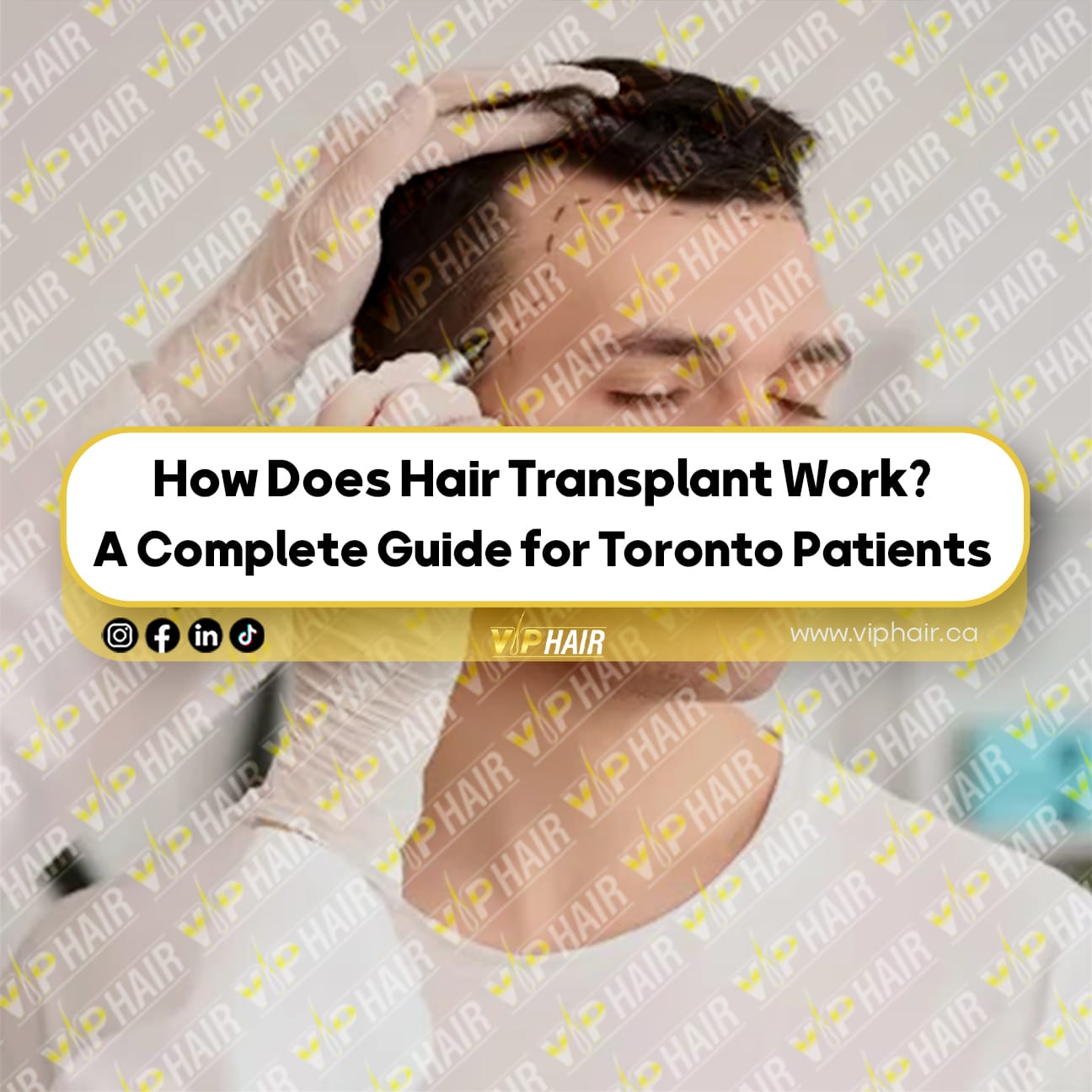
Hair Loss Isn’t the End – It’s a New Beginning
Hair loss can feel devastating, especially when it starts affecting your confidence, social life, and self-image. But thanks to modern hair restoration techniques, especially hair transplants, Toronto patients now have a permanent, natural-looking solution. This guide walks you through how hair transplant works, the available techniques, what to expect during each step, and why choosing the right clinic in Toronto matters.
What Is a Hair Transplant?
A hair transplant is a minimally invasive cosmetic procedure in which hair follicles are extracted from a donor area (usually the back or sides of your scalp) and implanted into areas experiencing hair thinning or baldness. Over time, these transplanted follicles grow naturally and blend seamlessly with your existing hair, offering a permanent and natural-looking solution.
Hair transplants are typically performed under local anesthesia and can take anywhere from 4 to 8 hours depending on the number of grafts required. The outcome is long-lasting, often with results that last a lifetime.
Who’s a Good Candidate for a Hair Transplant in Toronto?
Not everyone is a suitable candidate for hair transplant surgery. Here are a few conditions that make someone an ideal match:
- Men and women with pattern baldness (androgenetic alopecia)
- Individuals with stable hair loss
- Patients with enough donor hair on the scalp
- Those in good overall health
- People who have realistic expectations about the outcome
Patients experiencing hair loss due to medications, autoimmune disorders, or sudden trauma may not be ideal candidates. An in-person consultation at a Toronto hair clinic will help assess suitability.
Types of Hair Transplant Techniques Available in Toronto
Toronto clinics generally offer two primary hair transplant methods: FUT and FUE. Understanding their differences will help you choose the best option for your needs.
Follicular Unit Transplantation (FUT)
Also known as the “strip method,” FUT involves removing a strip of scalp from the donor area, typically from the back of the head. The strip is dissected into individual follicular units and implanted into balding areas.
Pros:
- Suitable for patients needing large graft sessions
- Often more cost-effective per graft
- Faster harvesting process
Cons:
- Linear scar on the donor area
- Longer healing time
- More discomfort during recovery
Follicular Unit Extraction (FUE)
FUE is a more advanced method where individual follicles are harvested using a small punch tool and then transplanted into the recipient area. It is less invasive and increasingly popular in Toronto clinics.
Pros:
- No visible linear scarring
- Quicker healing process
- Minimal post-op discomfort
Cons:
- Slightly more expensive
- Requires more time to complete
Many clinics in Toronto now specialize in FUE due to its minimally invasive nature and superior cosmetic outcomes.
Step-by-Step: How Hair Transplant Works
Let’s break down the entire hair transplant journey for patients in Toronto:
Step 1: Consultation and Hair Analysis
Your journey begins with a personalized consultation. During this visit, your specialist will:
- Assess the degree of hair loss
- Examine donor hair availability
- Review your medical history
- Discuss your expectations and desired results
Photos and scalp mapping may be done to plan the transplant precisely.
Step 2: Designing the Hairline
Your surgeon will create a customized hairline that complements your face shape, age, and hair type. This step is crucial for achieving natural results.
Step 3: Preparing the Donor Area
The donor area is trimmed short, and local anesthesia is administered. In FUT, a strip is excised, while in FUE, follicles are extracted individually.
Step 4: Graft Extraction
FUT: The strip is carefully dissected into grafts containing 1–4 hairs.
FUE: Follicles are harvested one at a time using a micro-punch tool.
Step 5: Graft Preservation
Extracted follicles are stored in a specialized solution to keep them healthy and hydrated until implantation.
Step 6: Recipient Site Preparation
Tiny incisions are made in the thinning or balding areas of the scalp using micro blades or needles, ensuring the right depth, direction, and angle for natural hair growth.
Step 7: Graft Implantation
Follicles are delicately placed into the recipient sites, prioritizing density, direction, and symmetry. Precision is key during this phase.
Step 8: Immediate Post-Op Care
Your clinic will provide:
- Pain medication (if needed)
- Antibiotic ointments
- Instructions for washing the scalp
- Guidelines for sleeping positions
Recovery Timeline: What to Expect After a Hair Transplant
Recovery from a hair transplant is usually quick, especially with FUE. Here’s a general timeline:
- Day 1–3: Mild swelling, redness, and scabbing
- Day 4–7: Scabs begin to fall off; swelling subsides
- Week 2–4: “Shock loss” phase — transplanted hairs fall out (normal and temporary)
- Month 2–4: New hair growth begins
- Month 6–9: Noticeable improvement in density
- 12 Months: Final results with full regrowth and natural appearance
Is Hair Transplant Safe?
Yes — when performed by experienced professionals in certified Toronto clinics, hair transplants are extremely safe. Most complications are minor and rare.
Potential side effects include:
- Temporary swelling or redness
- Itching and mild discomfort
- Numbness or tightness (usually subsides)
- Rare infections (preventable with proper care)
Cost of Hair Transplant in Toronto
Toronto patients typically pay between $4,000 and $15,000 depending on:
- Number of grafts
- Technique (FUE usually costs more)
- Clinic reputation and surgeon experience
Some clinics offer free consultations and financing options to make the procedure more accessible. (Internal link: “Cost of Hair Transplant in Toronto”)
Why Toronto Patients Trust Local Clinics
Toronto is known for its high medical standards, skilled cosmetic surgeons, and cutting-edge clinics. Here’s why staying local is smart:
- Consistent follow-up care
- Access to board-certified specialists
- No travel stress or language barriers
- Clinics adhere to Health Canada regulations
Real Results: Before & After Hair Transplant
The transformation after a successful hair transplant can be life-changing:
Fuller hairline and temples
Higher confidence
Natural look and feel
Low maintenance
Most Toronto clinics provide real patient photos and testimonials that showcase dramatic and natural improvements. (Internal link: “Hair Transplant Before & After Gallery”)
How to Maximize Your Hair Transplant Results
- Follow post-op care instructions precisely
- Avoid smoking and alcohol for at least 2 weeks
- Do not touch or scratch the treated areas
- Sleep elevated to reduce swelling
- Use doctor-recommended shampoos and products
Maintaining a healthy diet and managing stress also play a role in promoting hair growth.
Final Thoughts: Restore Your Hair, Reclaim Your Confidence
Understanding how hair transplants work empowers you to make an informed decision. If you’re considering restoring your hairline and confidence, Toronto offers a wealth of skilled professionals, top-tier clinics, and innovative technology.
Don’t let hair loss define you — take the next step toward a more confident you.


Leave A Comment